



The Krakow Method at Bright Kiddo
Reading lessons using the Krakow method
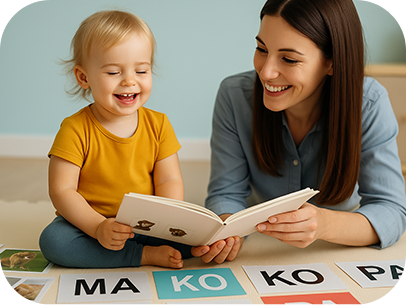
Learning to read is fun and motivating for children

Why do children respond so well to this form of learning?
They learn in accordance with their linguistic development
The Krakow method is based on syllables, which are a natural stage in speech development. This allows children to learn the material more easily and not become discouraged by spelling.
They see the effects quickly
After just a few lessons, they can recognize syllables and vowels, which gives them a real sense of success and motivates them to continue learning.
They develop speech and thinking
The classes support not only reading skills, but also concentration, logical thinking and communication – especially for children who need more time for language development.
They learn through play
Cards, movement, rhythm, and sounds transform learning into engaging play. Children feel at ease and eager to participate.
They have space to develop at their own pace
Classes are tailored to the child’s abilities and readiness – without rushing, but with attention and support.
They gain confidence before school
Mastering reading at the preschool stage strengthens the sense of agency and facilitates adaptation to new educational challenges.
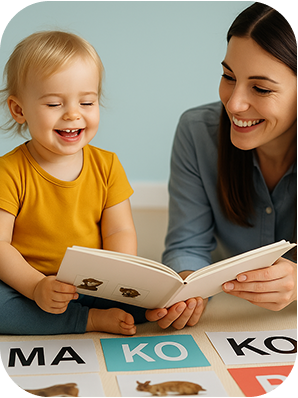
What makes our Krakow Method reading classes unique?
Children learn to read in a way that is consistent with natural speech development – without pressure, without spelling, with joy and a sense of achievement.
Classes based on the Krakow method, adapted to the child’s stage of development
Learning to read syllables using the Krakow Method relies on visualization, rhythm, and repetition. This allows children to acquire vowels and syllables in a way that aligns with how they learn to speak—gradually, at their own pace.
Reading that brings joy and motivation
Reading with the Krakow Method combines gestures, flashcards, and language games, engaging children emotionally and cognitively. Initial successes—syllable recognition or vowel blending—come quickly and strengthen motivation for further learning.
A safe space also for children with language difficulties
The Krakow Method in preschool also works well as a support method for children whose speech development is slower. This structured, clear approach, based on multi-sensory activation, is also effective for children with language development disorders.
The most frequently asked questions from parents about learning to read using the Krakow method
Reading with the Krakow Bright Kiddo method
What does the Krakow method of teaching reading involve?
The Krakow Method is a syllable-based reading system – children learn to recognize and combine vowels and syllables before learning individual letters. The process follows the child’s natural speech development, without spelling. A rich set of tools is used: flashcards, gestures, rhythm, repetition, and multi-sensory exercises. The child actively participates in learning and achieves rapid results.
At what age can you start learning to read using this method?
Vowel training can begin with a child as early as infancy. The Krakow Method is individualized, adapting the pace of learning to the child’s developmental stage. It has been successfully used with children in nursery, older preschoolers, and children who need support in their language development.
Will the Krakow method work for a child who has speech difficulties?
Yes. One of the main principles of the Krakow Method is supporting children with delayed or impaired language development. Learning to speak using the Krakow Method involves regularly reinforcing linguistic structures in a multisensory manner. This approach is particularly recommended for those with aphasia, alalia, speech delays, or autism spectrum disorder.
Doesn’t the Krakow method confuse letters with syllables?
No – the method is based on the conscious and sequential introduction of linguistic material. Children do not “learn syllables instead of letters,” but rather acquire linguistic units according to the natural rhythm of development – from simple sounds to more complex structures. Importantly, the method does not hinder further reading learning in school – on the contrary, children develop a stronger phonological foundation and text comprehension.

Najbardziej lubię, jak pani pokazuje nowe sylaby i zgadujemy razem. Jak zgadnę, to wszyscy się cieszą.
Zosia, 5,5 roku
Na początku nie wiedziałem, co to znaczy AM albo MA, ale teraz już sam czytam i to fajne!
Franek, 6 lat
Kiedy klaszczemy do sylab, wszystko lepiej zapamiętuję. Pani mówi, że to świetnie mi idzie.
Olek, 5 lat
Umiem już kilka samogłosek! Czekam, aż będzie karta z literką A, bo ją lubię najbardziej.
Kasia, 5 lat

Do you want to support your child in learning to read effectively?
